Retail and food
Anything with a cold chain
Refrigeration, freezers and POS. The cost of an outage is inventory plus the hours you are shut, and both are measurable before you buy anything.

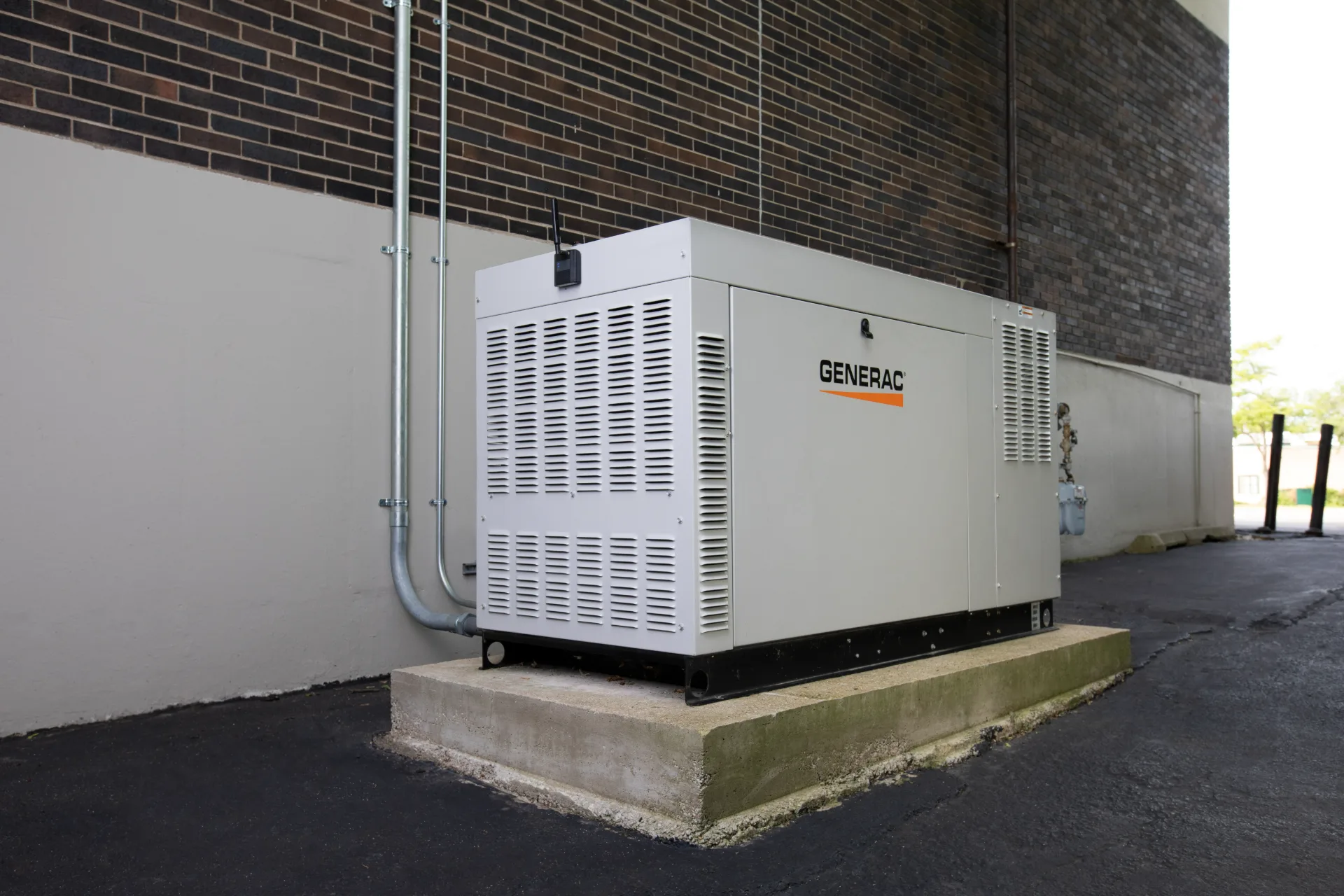
Single and three-phase standby sets for buildings that lose money the moment the lights go out. Our own electricians, our own permits, and work scheduled around your operating hours rather than ours.
On a house, standby power is one crew and one inspection. On a commercial building it is a load study, a service coordination with the utility, a transfer arrangement that matches how the building is actually used, and an inspection regime that depends on occupancy type.
We do the electrical work ourselves under TECL #31315 and we hold the permit, which means there is one number to call when a schedule slips. Where you already have an electrical contractor, we coordinate with them rather than around them.
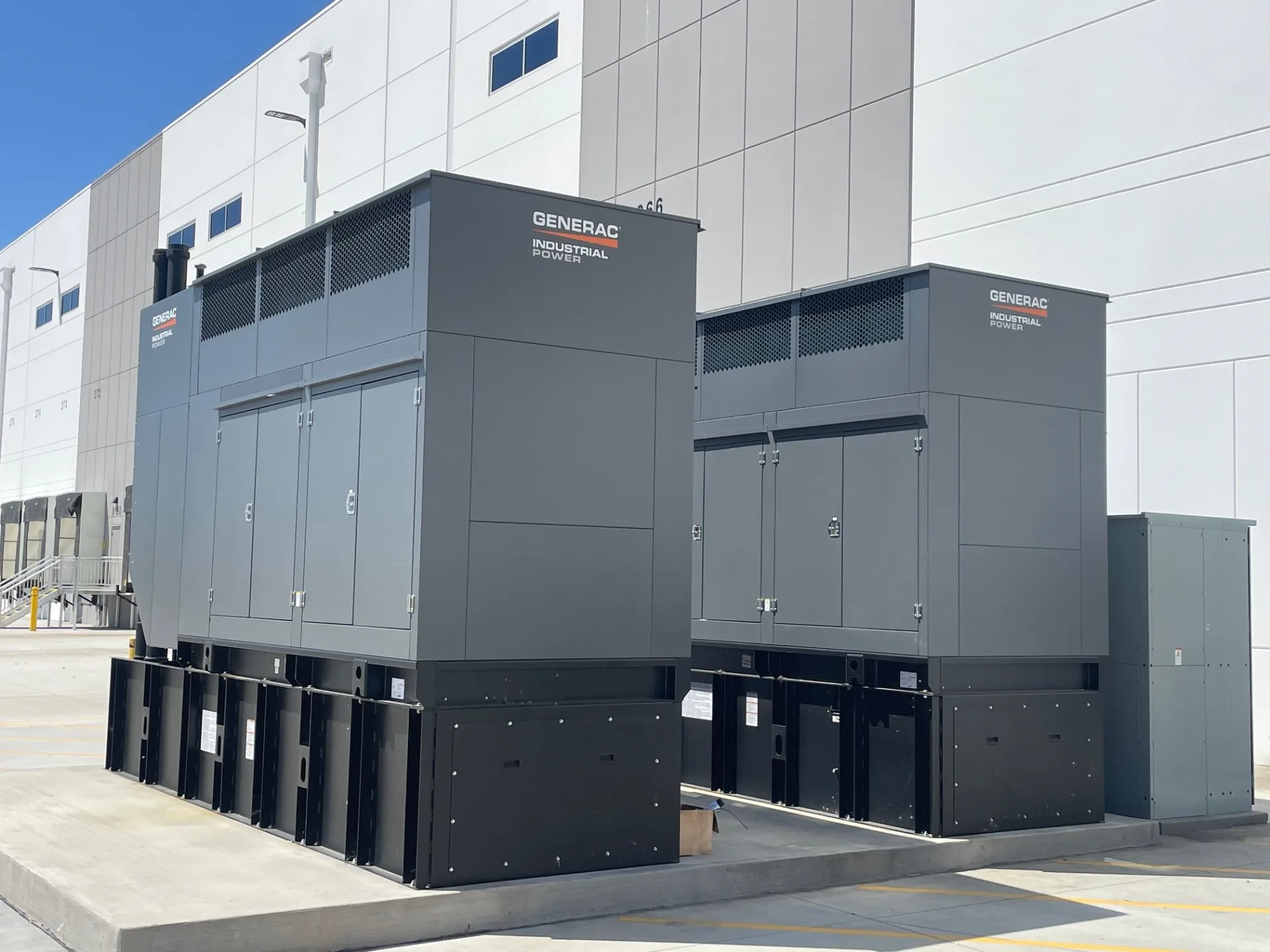
Refrigeration, freezers and POS. The cost of an outage is inventory plus the hours you are shut, and both are measurable before you buy anything.
Lighting, life safety, lifts, comms rooms. Usually a partial-load arrangement rather than the whole building, decided by what has to stay up.
Motor starting is the constraint here, not the running load. Sizing that ignores inrush is the most common fault we find on existing sets.
Portfolios where standby power was installed piecemeal by whoever was cheapest at the time. We survey what is there and put it on one service schedule.
Service entrance, switchgear, available space, gas or diesel supply, and what the building must keep running. Nothing is priced before this.
Running and starting loads, then the transfer arrangement: whole building or selected panels. You get the reasoning, not just the model number.
Permit pulled in our name, coordination with the utility and with your own electrical contractor if you have one.
Set, gas or fuel, switchgear and transfer equipment. Sequenced so the building keeps trading wherever that is possible.
Live transfer test under load, with your maintenance staff present, and the documentation handed over for insurance and warranty.
Commercial sets sit idle for months and then get asked to carry a building for days. A weekly exercise cycle proves the engine starts. It does not prove the set will take the load, that the batteries will crank in year four, or that the transfer arrangement still does what the drawing says.
Hurricane season runs June to November. We schedule commercial service visits ahead of it rather than during it, and agreement holders get priority dispatch when an outage is regional.
Talk about an agreementMon–Fri 7:30 to 5:00 from our Houston office, and the on-call tech after hours.
Three short steps, then a person calls you back. Same business day, from a Houston number.