01
Site visit
We look at the panel, the gas supply, the meter and where a machine can legally and sensibly sit. This is also when we do the load calculation.

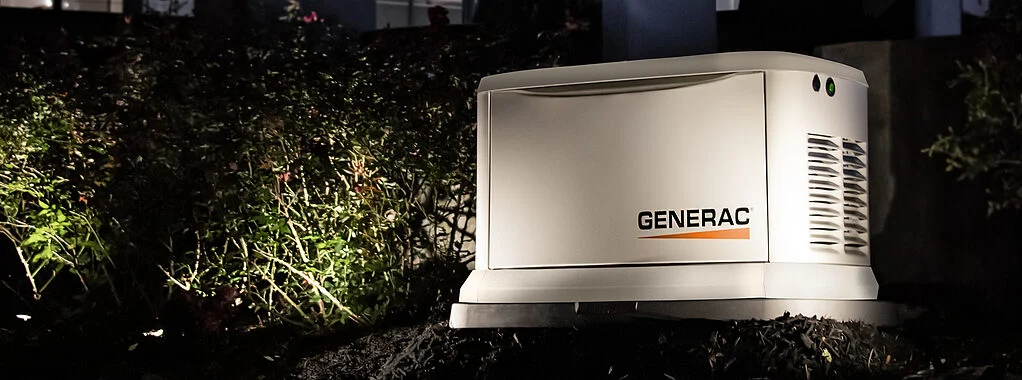
Sized on a load calculation, wired by our own licensed electricians under TECL #31315, permitted in our name, and tested under load before we leave. Generac and Kohler, both factory-certified.
Before a machine is named, someone has to work out what the house actually draws: air conditioning first, then the well pump, the range, the water heater. That number sets the size of the generator, the size of the gas line and whether the panel needs work.
It is also where quotes diverge. A quote that arrives without one is a guess, and the two ways a guess goes wrong are a machine too small to carry the house or a machine you paid too much for. Where load management does the job, we will price that against the bigger unit and let you choose.
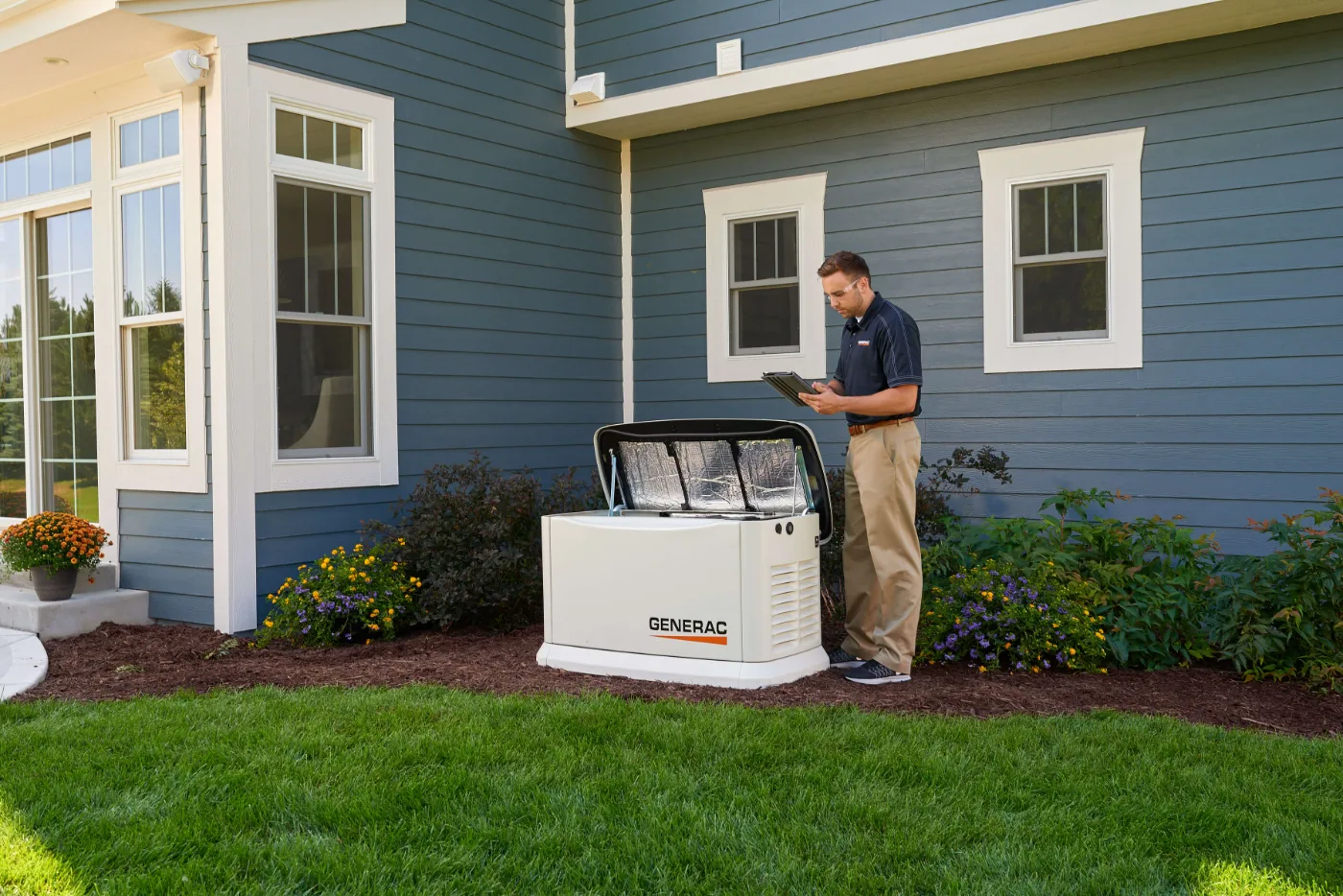
We look at the panel, the gas supply, the meter and where a machine can legally and sensibly sit. This is also when we do the load calculation.
Machine, transfer switch, gas work, electrical work, permit. A scope you can hold another quote against, not a single number.
Where a permit applies we pull it in our name. You are told the install date and who is arriving.
Pad, set, gas connection, transfer switch and panel work by our own licensed electricians. Usually a day or two on site.
We meet the inspector. Then the machine is started under load and you are walked through what it does on an outage.
Permit and inspection requirements vary by jurisdiction across Greater Houston. We confirm what applies at your address during the site visit and pull whatever is needed in our name.
Most dealers are certified for one line, which makes the answer to “which brand” predictable before you ask. We are factory-certified for Generac and Kohler, we can do warranty work on either, and we file the claim ourselves.
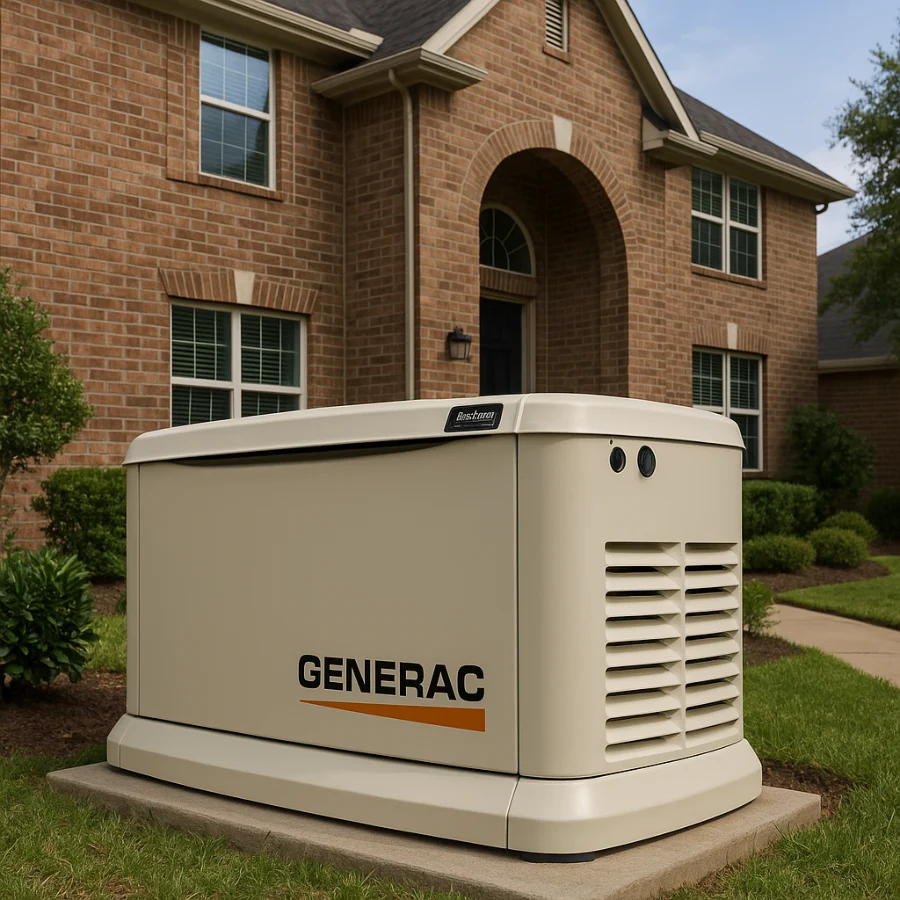
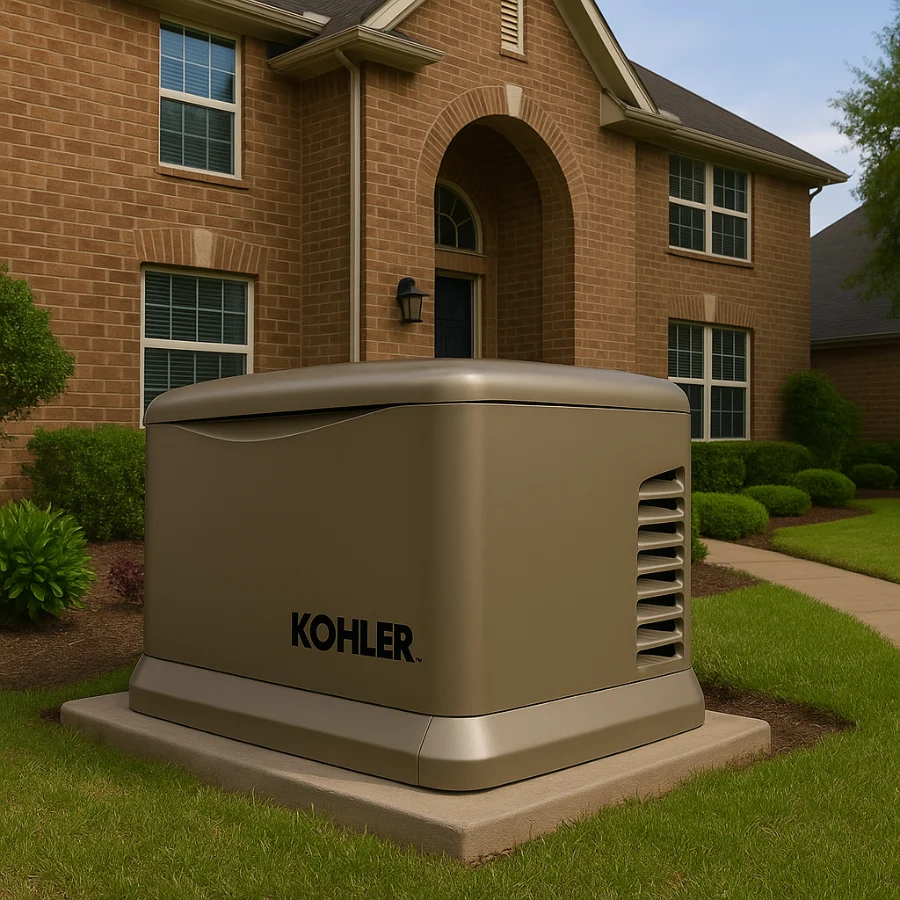
Most installs are one to four days on site. The overall calendar is usually set by permitting and utility coordination, which runs one to three weeks depending on the jurisdiction, plus one to three days for consultation and design.
Either. Natural gas where there is a supply of adequate capacity, propane where there is not. The load calculation determines whether your existing supply is enough.
That is a sizing decision, not a fixed answer. Whole-house is achievable on most homes; where it would mean a much larger machine, load management on selected circuits often gets the same result for less.
Yes, and we service units other companies installed. Warranty work on Generac and Kohler is done by us and we file the claim.
Units that fail in an outage have almost always failed a service interval first: a flat battery, old oil, a filter nobody changed. The weekly exercise cycle tells you the engine runs; it does not tell you the machine will carry the house for four days.
We service what we install and what we didn’t, and hurricane season runs June to November, so the sensible time to find a fault is not in it.
Maintenance plans“During Hurricane Beryl, I stayed with my grandma who had a generator installed by Generator Industries… our power was out for a week. She was the only one who had power in our family and the generator worked phenomenally! … the lights went out for maybe 10 seconds before the generator kicked on.”
Mon–Fri 7:30 to 5:00 from our Houston office, and the on-call tech after hours.
Most whole-house installations we complete in Greater Houston land between $14,000 and $20,000, fully installed. The spread comes down to the size of the unit, how far the gas and electrical runs have to travel, and whether your panel needs upgrading. We quote the finished number after a site visit, not a starting-from figure.
It depends on your square footage, your AC tonnage, your total electrical load and which circuits you actually want running. A refrigerator draws roughly 600 to 800 watts; an air conditioner can draw three to four times its running wattage just to start. We run a load calculation during the consultation rather than guessing from house size.
In most cases, yes. A properly sized whole-house system runs central air through a Houston summer. Where the load is tight we use load management to prioritise essential circuits so the generator is never asked to start everything at once.
Natural gas is usually the better option in Houston because it feeds continuously from the utility line, so an extended outage never becomes a refuelling problem. Propane is the answer where natural gas is not available at the property, and works well when the tank is sized correctly. We design around what your address actually has.
Yes. Houston and the surrounding jurisdictions require permits for the electrical work, the gas work, and the generator's placement and connection. We pull all of them in our own name and manage the inspections as part of the install. You do not deal with the city.
Onsite installation is 1 to 4 days. The full timeline runs longer because of permitting: consultation and system design takes 1 to 3 days, permitting and utility coordination usually 1 to 3 weeks depending on the jurisdiction, then the install, then final inspection and commissioning shortly after.
River Oaks · Pearland · Memorial · Missouri City · Sugar Land · Friendswood · Richmond · League City · Katy
Three short steps, then a person calls you back. Same business day, from a Houston number.